Monk Fruit Sweetener: The Truth About Monk Fruit, Erythritol & Its Safety
If you have been looking for a way to reduce added sugar without giving up sweetness, you have probably come across monk fruit sweetener.
But there is a lot of confusion around it.
Is monk fruit actually natural?
Is monk fruit the same as erythritol?
Why do some monk fruit sweeteners contain erythritol?
Does monk fruit have calories?
And most importantly, is monk fruit safe?
Let’s separate the facts from the marketing.
What Is Monk Fruit?
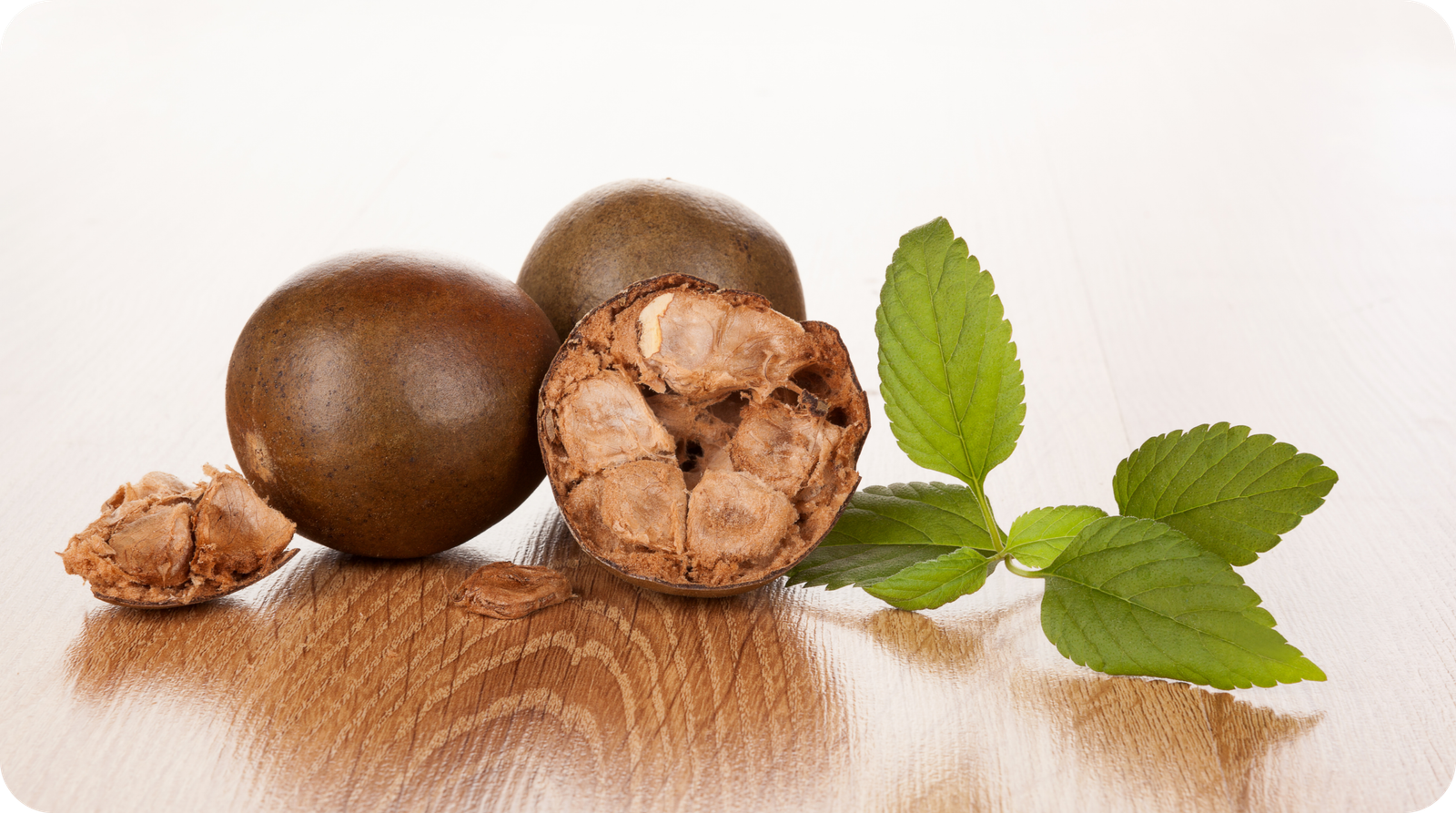
Monk fruit, scientifically known as Siraitia grosvenorii, is a small fruit native to southern China. It is also known as Luo Han Guo.
Unlike regular sugar, the sweetness of monk fruit does not primarily come from sucrose. It comes from a group of naturally occurring compounds called mogrosides.
Mogrosides are responsible for the characteristic sweetness of monk fruit extract. Depending on the concentration and type of extract, monk fruit extract can be roughly 100–250 times sweeter than sugar. (U.S. Food and Drug Administration)
That means only a very small quantity of monk fruit extract is required to provide sweetness.
So, is monk fruit actually a fruit?
Yes.
The original ingredient comes from a fruit.
However, there is an important distinction:
Monk fruit ≠ monk fruit extract.
A monk fruit extract is a concentrated ingredient obtained from the fruit, with the sweet-tasting mogrosides concentrated during processing.
Think of it like this:
Monk fruit → extraction → concentration of mogrosides → monk fruit extract
The ingredient used in a food product may therefore be a highly concentrated extract rather than powdered whole fruit.
What Makes Monk Fruit Sweet?
The answer is mogrosides.
Mogrosides are naturally occurring compounds found in monk fruit, with mogroside V being one of the important sweet-tasting mogrosides studied in monk fruit extracts. (PubMed Central (PMC))
These compounds are extremely sweet compared with sucrose.
This is why manufacturers can use very small quantities of monk fruit extract to provide sweetness.
And because the amount required is so small, monk fruit extracts are generally used as high-intensity sweeteners rather than as a bulk replacement for sugar.
Monk Fruit vs Sugar: What’s the Difference?
The biggest difference is the amount required to create sweetness.
|
Monk Fruit Extract |
Sugar |
|
|
Source |
Monk fruit |
Sugarcane/sugar beet |
|
Main sweet component |
Mogrosides |
Sucrose |
|
Sweetness |
~100–250× sweeter than sugar depending on extract |
Baseline |
|
Quantity required |
Very small |
Relatively large |
|
Calories |
Used in very small quantities and generally considered non-nutritive |
Provides calories |
|
Role in food |
Primarily sweetness |
Sweetness + bulk |
Monk fruit extract can therefore be useful when a food manufacturer wants sweetness without relying on large quantities of added sugar.
However, it is important not to confuse “natural” with “automatically healthy.”
The overall nutritional quality of a food still depends on the entire formulation.
What Is Monk Fruit With Erythritol?
This is where much of the confusion starts.
When you search for monk fruit sweetener online, you will often see products labelled something like:
“Monk Fruit + Erythritol”
So what does that mean?
It means the product contains two different ingredients:
- Monk fruit extract — provides intense sweetness
- Erythritol — provides bulk, volume and a more sugar-like texture
Monk fruit extract is incredibly sweet. If you tried to use it in the same quantity as table sugar, you would need an extremely small amount.
That creates a practical problem.
For example, imagine you want to replace one teaspoon of sugar in a recipe.
You cannot simply add a tiny pinch of pure monk fruit extract and expect it to behave like a teaspoon of sugar. You would lose the bulk and physical volume that sugar normally provides.
This is one reason manufacturers may combine monk fruit extract with a bulking agent such as erythritol.
What Is Erythritol?
Erythritol is a sugar alcohol (polyol) used as a sweetener and bulking ingredient.
Despite the word “sugar alcohol,” erythritol is neither table sugar nor alcoholic beverage alcohol.
It is produced industrially by fermentation of carbohydrate sources followed by purification and drying. EFSA describes erythritol as a polyol sweetener and has evaluated its safety as a food additive. (European Food Safety Authority)
Erythritol can help make a high-intensity sweetener easier to use because it adds physical volume.
So when you see:
Monk Fruit + Erythritol
you are not looking at pure monk fruit extract.
You are looking at a blend.
Is Monk Fruit the Same as Erythritol?
No.
This is one of the biggest misconceptions.
Monk fruit extract and erythritol are completely different ingredients.
Monk fruit extract
Comes from:
Monk fruit → extract → mogrosides
Erythritol
Comes from:
Carbohydrate source → fermentation → purification → erythritol
They perform different functions in a food formulation.
Monk fruit extract provides intense sweetness.
Erythritol provides sweetness, bulk and texture.
So if a product says “sweetened with monk fruit and erythritol,” it contains both.
Why Is Erythritol Added to Monk Fruit?
There is a simple formulation reason.
Pure monk fruit extract is extremely concentrated.
Because it is so sweet, it is difficult to measure and distribute in large quantities like regular sugar.
Erythritol can act as a carrier/bulking ingredient, making the finished sweetener easier to measure and use.
This is why many commercially available granulated monk fruit sweeteners are actually blends.
For example:
Monk fruit extract + erythritol = concentrated sweetness + bulk
This doesn’t automatically make such a product unsafe.
It simply means it is not the same formulation as pure monk fruit extract.
Is Monk Fruit Safe?
Monk fruit extract has been evaluated as a sweetening ingredient in the United States, and the FDA has responded to multiple GRAS notices for Siraitia grosvenorii fruit extracts without questioning the conclusions under the intended conditions of use. (U.S. Food and Drug Administration)
The FDA also notes that an acceptable daily intake (ADI) has not been specified for monk fruit extract. (U.S. Food and Drug Administration)
However, there is an important point that often gets lost online:
“Natural” does not mean “you can consume unlimited amounts.”
The safety of any ingredient depends on the ingredient, its specification, the amount consumed and the conditions of use.
And while research into mogrosides is growing, many of the proposed health effects seen in laboratory and animal research still require stronger human clinical evidence. (PubMed)
So we shouldn’t turn monk fruit into a miracle ingredient.
Its primary role in food is simple:
It provides sweetness.
Does Monk Fruit Have Calories?
Pure monk fruit extract is used in extremely small quantities because of its high sweetness intensity.
The mogrosides responsible for sweetness are considered non-nutritive, and monk fruit extracts are generally used as non-caloric or negligible-calorie sweetening ingredients. (PubMed Central (PMC))
But there is an important distinction:
Pure monk fruit extract ≠ every product labelled “monk fruit sweetener.”
A commercial monk fruit sweetener may contain other ingredients such as erythritol or other bulking agents.
Therefore, always check the ingredient list, not just the front of the package.
Does Monk Fruit Contain Erythritol?
No.
Monk fruit itself does not naturally contain erythritol as its sweetening component.
Erythritol is a separate ingredient.
If a product contains both, it has been formulated as a blend.
This is why reading the ingredient list matters.
For example:
Product A:
Monk fruit extract
Product B:
Erythritol + monk fruit extract
These are not identical formulations.
Pure Monk Fruit Extract vs Monk Fruit + Erythritol
Here’s the simplest way to understand the difference:
|
Feature |
Pure Monk Fruit Extract |
Monk Fruit + Erythritol |
|
Monk fruit extract |
Monk fruit |
Sugarcane/sugar beet |
|
Main sweet component |
✓ |
✓ |
|
Erythritol |
✗ |
✓ |
|
Mogrosides |
✓ |
✓ |
|
Bulk/volume |
Very low |
Higher |
|
Role in food |
Primarily sweetness |
Sweetness + bulk |
|
Main purpose |
High-intensity sweetness |
Sweetness + bulk |
|
Formulation |
Concentrated |
Blended |
Neither comparison should be reduced to “one is good and the other is bad.”
They are simply different formulations designed for different purposes.
Why Does Cafetein Use Pure Monk Fruit Extract?
At Cafetein, we took a different approach.
Our goal was to formulate our plant protein around the ingredients we actually wanted in the product rather than adding a bulking sweetener simply to make formulation easier.
That’s why Cafetein uses monk fruit extract without erythritol.
Our approach is straightforward:
Plant protein + superfoods + natural flavouring + monk fruit extract
rather than:
Plant protein + superfoods + natural flavouring + monk fruit/erythritol blend
We use monk fruit primarily for what it is good at:
providing sweetness in a highly concentrated form.
And because monk fruit extract is intensely sweet, only a small amount is required.
Is Monk Fruit Better Than Erythritol?
This question needs a little clarification.
If you’re asking whether monk fruit extract is the same ingredient as erythritol, the answer is no.
If you’re asking whether one is universally “better,” there isn’t a scientifically meaningful answer without defining better for what purpose.
Monk fruit extract is useful when you want high-intensity sweetness from mogrosides.
Erythritol can be useful when you need both sweetness and bulk.
The right choice depends on the formulation.
At Cafetein, our formulation goal is different: we don’t need erythritol as a bulking agent, so we use monk fruit extract without erythritol.
Does Monk Fruit Have Any Side Effects?
Monk fruit extract is generally considered safe under its intended conditions of use, but individual responses can vary with any food ingredient.
One advantage of looking at the ingredient separately is that you don’t automatically attribute effects from a monk fruit + erythritol blend to monk fruit itself.
For example, if a person experiences digestive discomfort after consuming a product containing several sweeteners or sugar alcohols, it would be inaccurate to automatically conclude that monk fruit caused it.
The complete ingredient list matters.
If you experience a suspected adverse reaction to any food ingredient, stop consuming the product and discuss it with an appropriate healthcare professional.
The Bottom Line
Monk fruit isn’t magic.
And it isn’t the same thing as erythritol.
Monk fruit is a fruit native to southern China.
Monk fruit extract contains concentrated mogrosides, which provide its intense sweetness.
Erythritol is a separate sugar alcohol commonly used as a sweetener and bulking ingredient.
And monk fruit + erythritol is simply a blend of the two.
At Cafetein, we chose to use pure monk fruit extract without erythritol because we wanted our protein powder to deliver sweetness without adding erythritol as a bulking ingredient.
Ultimately, the smartest thing you can do isn’t to blindly trust words like “natural,” “clean” or “sugar-free.”
Read the ingredient list.
Know what you’re actually consuming.
And understand why each ingredient is there.
That’s what informed nutrition looks like.
Frequently Asked Questions
Is monk fruit natural?
Monk fruit is a fruit, scientifically known as Siraitia grosvenorii. Monk fruit extract is produced by extracting and concentrating naturally occurring sweet compounds called mogrosides from the fruit.
Is monk fruit the same as erythritol?
No. Monk fruit extract and erythritol are different ingredients. Monk fruit provides sweetness through mogrosides, while erythritol is a sugar alcohol that can provide sweetness and bulk.
Why is erythritol added to monk fruit sweetener?
Pure monk fruit extract is extremely sweet, so only a very small quantity is needed. Erythritol can be added as a bulking agent/carrier to make the sweetener easier to measure and use like sugar.
Does pure monk fruit contain erythritol?
No. Erythritol is a separate ingredient. If erythritol is present in a monk fruit sweetener, it has been added as part of the formulation.
Does Cafetein use erythritol?
No. Cafetein uses monk fruit extract without erythritol.
Is monk fruit sweetener safe?
Monk fruit extracts have been evaluated for food use, including multiple FDA GRAS notices in the United States. Safety depends on the specific ingredient, specification and intended use. (U.S. Food and Drug Administration)
Does monk fruit contain sugar?
The sweetness of monk fruit extract comes primarily from mogrosides rather than sucrose. Commercial monk fruit products can contain other ingredients, so checking the ingredient list is important.
Does monk fruit have calories?
Monk fruit extract is used in very small quantities and is generally considered a non-nutritive sweetening ingredient. However, the calorie content of a finished product depends on its complete formulation.
Is monk fruit better than sugar?
Monk fruit extract can provide intense sweetness without functioning like ordinary table sugar, which is why it is used in sugar-reduced formulations. Whether a finished food is nutritionally better depends on its complete formulation and overall diet.
Is monk fruit better than erythritol?
They serve different formulation purposes. Monk fruit extract provides high-intensity sweetness, while erythritol can provide both sweetness and bulk. Neither should automatically be described as universally “better.”