
Superfood Plant Protein vs Whey Protein: Which Is Better for Digestion?
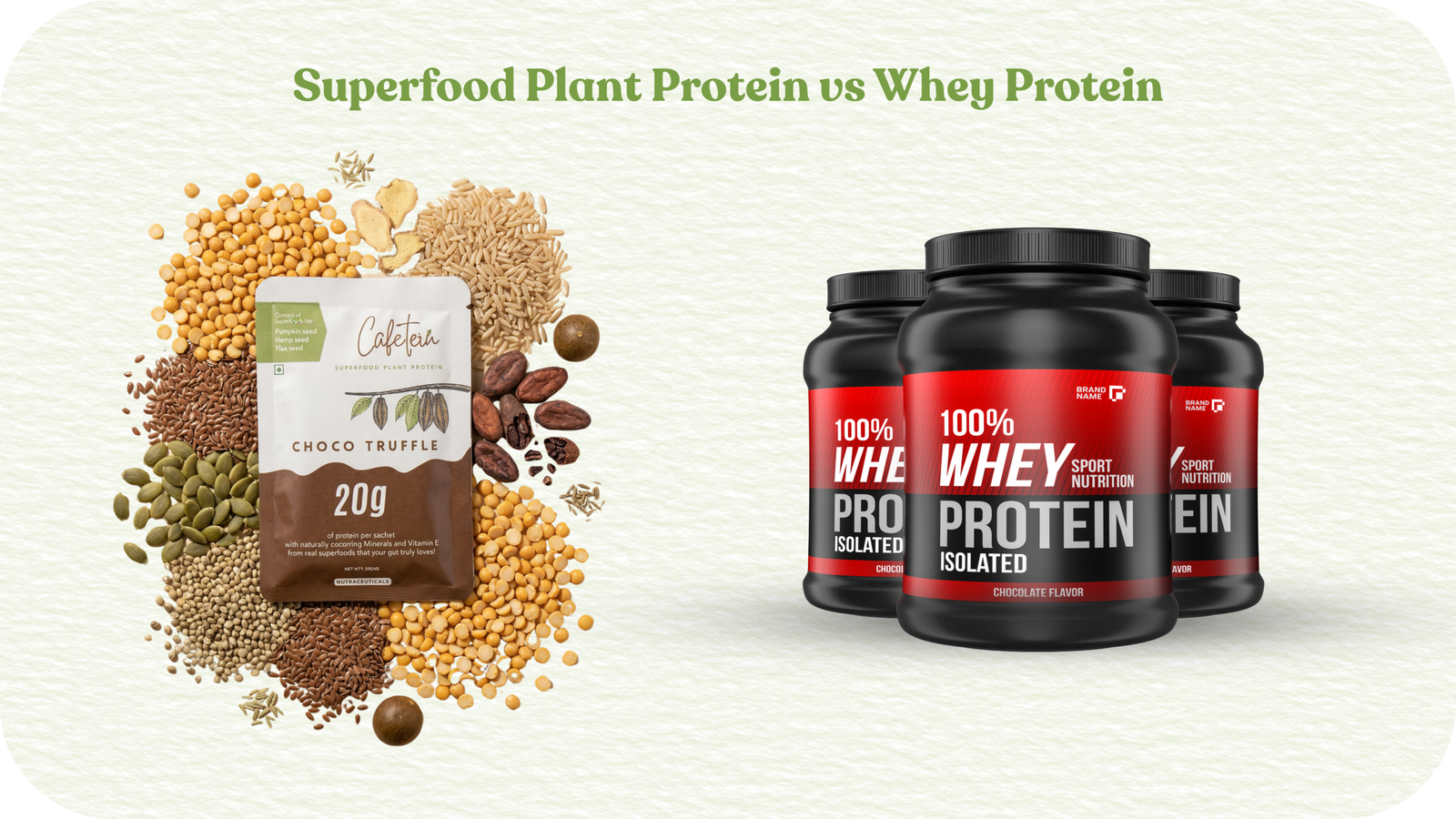
Protein is one of the most important nutrients for muscle recovery, energy, satiety, and overall health. However, choosing the right protein powder can be confusing, especially when comparing Superfood Plant Protein vs Whey Protein.
While whey protein has been a popular choice for decades, many people are now switching to plant-based protein powders due to concerns about digestion, bloating, lactose intolerance, and long-term gut health.
So, which protein is actually better for digestion?
Let’s compare them in detail.
What Is Whey Protein?
Whey protein is derived from milk during the cheese-making process. It contains all nine essential amino acids and is considered a complete protein source.
Common types include:
- Whey Protein Concentrate
- Whey Protein Isolate
- Whey Protein Hydrolysate
Whey protein is known for its fast absorption and muscle-building benefits.
However, because it comes from dairy, some people experience digestive discomfort after consuming it.
What Is Superfood Plant Protein?
Superfood Plant Protein is a blend of plant-based protein sources combined with nutrient-rich superfoods to provide protein along with additional vitamins, minerals, antioxidants, and fiber.

Common ingredients include:
- Pea Protein
- Brown Rice Protein
- Flax Seeds
- Hemp Seeds
- Pumpkin Seeds
- Sunflower Seeds
- Plant-Based Superfoods
Unlike dairy-based proteins, plant proteins are naturally lactose-free and easier for many individuals to digest.
Plant Protein vs Whey Protein: Digestion Comparison
1. Lactose Content
One of the biggest differences between whey and plant protein is lactose.
Whey protein is derived from milk and may contain lactose, especially whey concentrate.
People who are lactose intolerant may experience:
- Bloating
- Gas
- Stomach cramps
- Digestive discomfort
Superfood Plant Protein contains no dairy and is naturally lactose-free, making it a suitable option for people with sensitive digestion.
2. Bloating and Digestive Comfort
Many gym-goers report feeling bloated after consuming whey protein.
This may happen because of:
- Lactose sensitivity
- Artificial sweeteners
- Dairy intolerance
- Poor digestion of milk proteins
Plant-based protein powders are generally gentler on the digestive system.
A high-quality Superfood Plant Protein formula may support digestive comfort while still providing adequate protein intake.
3. Fiber Content
Whey protein contains very little fiber.
Plant protein sources naturally contain dietary fiber, which can help support:
- Healthy digestion
- Better satiety
- Regular bowel movements
- Gut microbiome health
Fiber is one of the key reasons many people feel better after switching from whey protein to plant protein.
4. Gut Health Support
Gut health has become a major focus in nutrition.
Plant-based protein powders often include ingredients that contribute additional nutrients beyond protein.
Superfood ingredients may provide:
- Antioxidants
- Phytonutrients
- Natural minerals
- Dietary fiber
These nutrients can complement an overall healthy diet.
Muscle Building: Can Plant Protein Match Whey?
A common concern is whether plant protein can build muscle as effectively as whey protein.
The answer depends on the amino acid profile and total protein intake.
High-quality Superfood Plant Protein formulas commonly combine:
- Pea Protein
- Brown Rice Protein
Together, these proteins provide a more complete amino acid profile.
For most individuals, meeting daily protein requirements consistently is more important than choosing whey over plant protein.
Whey Protein Side Effects Some People Experience
Not everyone experiences side effects from whey protein, but some common complaints include:
- Bloating
- Gas
- Stomach discomfort
- Acne flare-ups
- Digestive issues
These effects are more common among people with dairy sensitivity or lactose intolerance.
If you frequently feel uncomfortable after consuming whey, it may be worth exploring a plant-based alternative.
Who Should Choose Whey Protein?
Whey protein may be suitable if:
- You tolerate dairy well
- You have no lactose sensitivity
- You want a fast-digesting protein source
- You prefer dairy-based supplements
Who Should Choose Superfood Plant Protein?
Superfood Plant Protein may be a better choice if:
- You experience bloating from whey
- You are lactose intolerant
- You follow a vegetarian or vegan lifestyle
- You prefer dairy-free nutrition
- You want additional nutrients from superfoods
- You are looking for a protein powder that supports digestive comfort
Superfood Plant Protein vs Whey Protein: Quick Comparison
| Feature | Superfood Plant Protein | Whey Protein |
|---|---|---|
| Dairy-Free | Yes | No |
| Lactose-Free | Yes | Usually No |
| Digestive Comfort | Often Better | Depends on Individual |
| Fiber Content | Higher | Minimal |
| Suitable for Vegans | Yes | No |
| Complete Protein | With Proper Blend | Yes |
| Muscle Recovery | Excellent | Excellent |
| Gut-Friendly | Generally Yes | Depends on Tolerance |
Which Protein Is Better for Digestion?
When comparing Superfood Plant Protein vs Whey Protein, digestion often becomes the deciding factor.
If you tolerate dairy well, whey protein can be an effective option.
However, if you regularly experience bloating, gas, or digestive discomfort, a high-quality plant-based protein powder may provide a more comfortable experience while still supporting muscle recovery and daily nutrition goals.
For many people today, Superfood Plant Protein offers a combination of protein, fiber, and nutrient-rich superfoods that supports both nutrition and digestive wellness.