Protein Sachets vs Protein Powder Tubs: Which Is Better for Everyday Use?
There was a time when buying protein powder meant one thing: a big plastic tub sitting somewhere in your kitchen. You opened it, found the scoop buried somewhere inside, measured your serving, mixed your shake and put the tub back. For someone who takes protein at home every day, that system works perfectly well. But life doesn’t always happen at home. You might be heading straight from the office to the gym. You might be travelling for two days. You might be staying at a hotel. You might simply want to keep a serving of protein in your work bag without carrying around a container that looks like it belongs in a supplement store.
That’s where protein sachets come in.
Single-serve protein sachets have become increasingly popular because they change something that sounds small but actually matters quite a lot: how easily protein fits into your everyday routine. The protein itself doesn’t magically become better because it is inside a sachet. The difference is in the format, portioning, portability and convenience. So, when it comes to protein sachets vs protein powder tubs, which one should you choose?
The honest answer is: it depends on how you use protein.
What Is a Protein Sachet?
A protein sachet is simply a single-serving portion of protein powder packed separately, usually in a sealed flexible packet. You open one, empty it into your shaker or glass, add your preferred liquid, mix and you’re done. The idea isn’t complicated. In fact, that’s exactly why it works. You don’t need to carry the entire protein container with you. You don’t need to carry a scoop. You don’t need to guess how much powder you should use. And you don’t need to transfer powder into another container before leaving home. Several protein brands in India now use this format, including products from large mainstream brands as well as newer nutrition companies. Amul, for example, currently sells single-serve whey sachets, while other brands use sachets for plant and fermented-protein products as well. The sachet isn’t a different type of protein. It’s simply a different way of delivering the same idea: one serving of protein, ready when you need it.
What Is a Protein Powder Tub?
A protein tub is the traditional multi-serving format most people associate with protein powder. You buy a larger container containing multiple servings, open it whenever you want a shake and measure each serving yourself using the included scoop. There’s nothing wrong with this format. In fact, if you drink protein every day at home, a tub can be extremely practical. You buy one larger pack, keep it in your kitchen, and use it whenever you need it. The problem starts when you try to make a large tub travel with you.
Suddenly, your simple protein shake requires a little more planning. You need the tub. You need the scoop. You need to make sure the lid is properly closed. You need enough space in your bag. And if you’re travelling, carrying a large container of powder for the sake of a few servings can feel unnecessarily inconvenient. That’s where the difference between the two formats becomes obvious.
Protein Sachets vs Tubs: The Real Difference
The protein itself doesn’t know whether it came from a tub or a sachet. If the formulation, serving size and ingredients are identical, the packaging format doesn’t change the fundamental nutritional nature of the protein.
What changes is the experience of using it.
A tub is designed around repeated use from one central container. A sachet is designed around individual use.
With a tub, you measure your serving.
With a sachet, the serving is already measured.
With a tub, you carry the container.
With a sachet, you carry the serving.
With a tub, you open the same container repeatedly.
With individually sealed sachets, each unused serving remains sealed until you need it.
That’s why the choice isn’t really about whether sachets are “better protein” or whether tubs are “better protein.” It’s about which format makes it easier for you to consistently consume the protein you actually intend to consume.
Why Protein Sachets Are Convenient
The biggest advantage of a protein sachet is almost embarrassingly simple:
You don’t have to measure anything.
You already know that you’re going to consume one serving. The powder is already portioned for you. This becomes particularly useful when you’re outside your home. Imagine you’re working in an office and you know you’ll go to the gym after work. Carrying a sachet in your bag is considerably simpler than carrying a full protein tub. Or you’re travelling for a weekend. Instead of packing a large container of protein, you can take the number of servings you actually need. Even something as simple as keeping a couple of sachets in your desk drawer can make protein more accessible on days when your meals don’t provide enough. That convenience may sound insignificant when you’re looking at it from your kitchen. It becomes much more significant when you’re trying to maintain a routine while moving between home, work, gym and travel.
No Scoop, No Guesswork
One of the underrated problems with protein tubs is the scoop. You know the situation. You open the tub, dig through the powder, find the scoop, measure your serving and somehow still manage to get powder on the kitchen counter. It’s not a huge problem. But it’s another small step. A single-serve protein sachet removes it. You tear it open and use the entire serving. For someone who wants consistency in their daily protein intake, having a pre-measured serving can also make tracking easier because you know exactly how much protein that serving is intended to provide. Of course, you should always check the actual nutrition label because serving sizes and protein content vary between products.
Are Protein Sachets Better for Travel?
This is probably where sachets make the most sense.
A large protein tub is excellent when it stays in one place.
A sachet is excellent when you don’t.
Whether you’re going on a business trip, visiting family, travelling for a holiday or simply spending an entire day away from home, individual servings are easier to pack. You can take three sachets for a three-day trip. You don’t have to carry thirty servings when you only need three. This same portability is one of the reasons Indian brands such as Amul market their single-serve sachets specifically around home and on-the-go use. And there’s another small benefit: you don’t have to worry about carrying a measuring scoop separately. Your serving is already with you.
What About Office Use?
This is actually one of the reasons we like the sachet format at Cafetein. A lot of people who need more protein aren’t spending their entire day inside a gym. They’re sitting at a desk. They’re working in an office. They’re running a business. They’re studying. They’re travelling between meetings. Their biggest problem isn’t necessarily knowing that protein is important. It’s finding a practical way to include enough of it in an ordinary day. A sachet can sit in a desk drawer, laptop bag or backpack until you need it. When you’re ready, you just need your shaker or glass and whatever liquid you prefer. It’s a small change, but sometimes removing small barriers is exactly what makes a habit easier to maintain.
What About Protein Tubs?
Now let’s give tubs their credit.
If you’re someone who drinks protein every day at home, there’s a good chance you don’t need sachets. A tub can be simpler and more economical depending on the product and pack size. You buy a larger quantity, keep it at home and scoop out your serving whenever you need it. There’s also less individual packaging involved compared with buying every serving separately. So if portability isn’t important to you, a tub can be a perfectly sensible choice. The mistake would be assuming that one format has to be universally better than the other. It doesn’t. A person who drinks protein every morning in their kitchen has a completely different requirement from someone who drinks protein between the office and gym.
Are Protein Sachets More Expensive?
This is where you shouldn’t compare the price of the whole package. Compare cost per serving. A large tub may look expensive because the upfront price is higher, but it could contain many more servings. Similarly, a sachet pack may look cheaper simply because the pack contains fewer servings.
The useful comparison is:
How much does one serving cost, and what are you getting in that serving?
Look at the protein content, ingredients, serving size and total number of servings before deciding whether one format represents better value. And remember that convenience itself has value, but it shouldn’t be used to hide poor economics. If two products contain essentially the same formulation and one costs significantly more simply because it is individually packed, you should know what you’re paying for. That’s why transparent pricing per serving matters.
Does a Sachet Keep Protein Fresher?
This needs a little nuance. Both tubs and sachets need to be stored properly according to the product’s instructions. A protein tub is opened repeatedly over its lifespan. With individual sachets, each unused serving remains sealed until it is opened. That means the remaining servings aren’t being accessed every time you prepare a shake. But it would be misleading to say that a sachet automatically makes a protein powder “fresh” or that a tub automatically makes it deteriorate. Packaging is only one part of product stability. The formulation, packaging material, manufacturing process, storage conditions and shelf life all matter. So don’t buy into exaggerated claims simply because the word “sachet” appears on the package.
What Should You Actually Look for When Buying Protein Sachets?
This is where the packaging should become secondary. A protein sachet can be convenient and still be a poor product. Before buying one, look at what’s actually inside.
Start with the protein source.
Is it whey, pea, rice, soy, a combination of plant proteins, or something else? Then look at how much actual protein you’re getting per serving A 30-gram sachet doesn’t automatically mean 30 grams of protein. The powder may contain other ingredients, so always check the nutrition panel.
Then look at the ingredient list.
If you’re specifically looking for a clean-label protein, don’t stop at the front of the package. The ingredient list tells you much more about how the product was actually formulated. And finally, look at the serving size and cost per serving. The most impressive-looking protein number on the front doesn’t tell the complete story.
Why We Chose Sachets for Cafetein
This is where the format becomes particularly relevant to Cafetein.
Cafetein was not designed around the idea that protein is only for people who spend two hours in a gym.
We wanted protein to fit into the lives of normal people who work, travel, study, exercise and have busy schedules.
That’s why our protein is packaged in individual sachets.
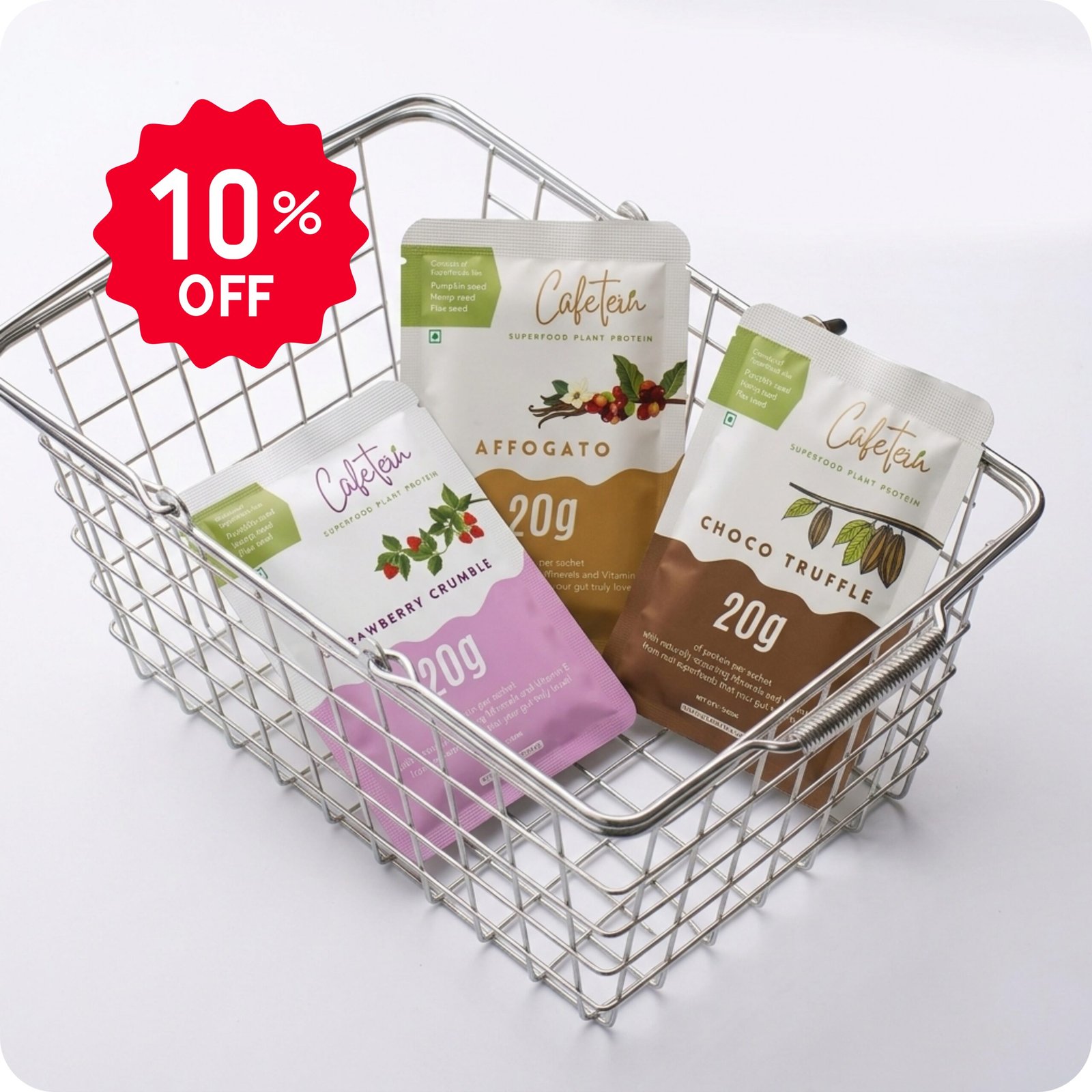
Each Cafetein sachet contains 33 g of powder and provides 20 g of protein.
You don’t have to carry a large tub to get one serving.
You don’t need to measure the powder.
You simply take the sachet, mix it and get on with your day.
And because Cafetein is a plant-based protein formula combining pea protein isolate, brown rice protein isolate and protein-containing seed ingredients, the sachet isn’t just about convenience. The formulation itself is designed around the kind of everyday protein product we wanted to create.
The idea is simple:
Protein shouldn’t require a lifestyle built around protein.
It should fit into your lifestyle.
Sachets Aren’t Just for Gym-Goers
This is something we think gets overlooked. When people hear “protein powder,” they often imagine someone standing in front of a mirror at the gym with a shaker in their hand. But protein is not exclusively a gym nutrient. Your body needs protein as part of normal nutrition, and people with very different lifestyles may want a convenient way to increase their protein intake. An office worker can use a protein sachet. A student can use one. Someone travelling can use one. Someone who exercises casually can use one. Someone who simply struggles to get enough protein from their regular meals can use one. You don’t have to identify as a “fitness person” to appreciate convenience.
So, Should You Buy Protein Sachets or a Tub?
If most of your protein consumption happens at home and you use protein regularly, a tub can be a very practical choice. If you’re constantly moving between home, work, gym and travel, sachets can make more sense. If you’re new to protein powder and don’t want to immediately commit to a large container, smaller sachet packs can also give you a convenient way to try a product before committing to a larger quantity. And if you like variety, sachets can make it easier to carry different flavours or choose an assortment depending on your mood.
There isn’t a universal winner.
The right format is the one that removes friction from your routine without compromising what is inside the package.
The Bottom Line
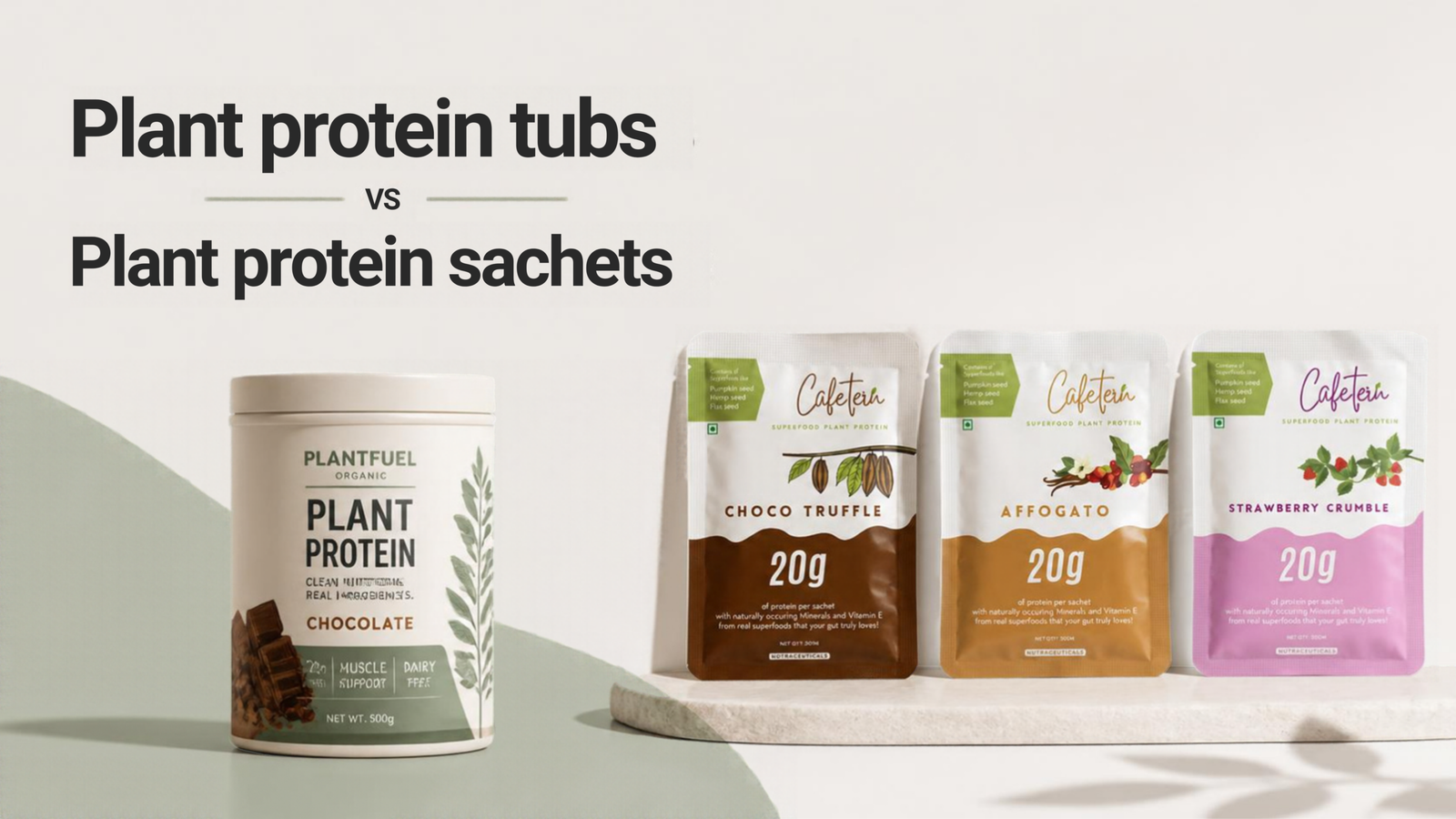
Protein sachets and protein tubs are not two different types of protein. They’re two different ways of using protein powder.
A tub gives you a larger multi-serving container that’s convenient for regular use at home.
A sachet gives you a pre-measured individual serving designed around portability and convenience.
Neither format automatically makes the protein better. What matters first is the protein source, protein content, ingredients, formulation and quality. Then comes the question of whether the format actually works for your life. At Cafetein, we chose sachets because we believe everyday protein should be convenient enough to carry, simple enough to use and practical enough to fit around real life. Because hitting your protein target shouldn’t require carrying a tub everywhere you go.
Sometimes, one sachet is all you need.
Frequently Asked Questions
What is a protein sachet?
A protein sachet is a pre-measured single serving of protein powder sealed in an individual packet. You open the sachet, mix it with your preferred liquid and consume it.
Are protein sachets better than protein tubs?
Neither is universally better. Sachets are generally more convenient for portability, travel and pre-measured servings, while tubs can be more practical for people who regularly consume protein at home.
Are protein sachets good for travel?
Yes. Their individual serving format makes them easier to pack than carrying an entire multi-serving protein container.
Do protein sachets contain one serving?
Typically, a single-serve sachet is designed to contain one serving, but serving sizes differ between products. Always check the serving information and nutrition label.
Are protein sachets more expensive than tubs?
Not necessarily. The most useful comparison is the cost per serving rather than the total package price. Compare the protein content, number of servings and ingredient formulation as well.
Do protein sachets need a scoop?
No. One of the main advantages of a single-serve sachet is that the powder is already portioned, so you don’t need to carry or use a separate scoop.
Can I carry protein sachets to the office?
Yes. Their compact, individual format makes them convenient to keep in a work bag, backpack or desk drawer.
How much protein is in a Cafetein sachet?
One Cafetein serving contains 33 g of powder and provides 20 g of protein.
Are protein sachets only for gym-goers?
No. Protein is part of everyday nutrition, and protein powder can be used as a convenient way to supplement dietary protein. You don’t need to be a professional athlete or serious gym-goer to use a protein sachet.
Is protein powder necessary?
No. Protein powder is a convenient food product, not a requirement for a healthy diet. You can obtain protein from many whole-food sources. Protein powder can simply make it easier to reach your desired intake when regular meals aren’t enough.